A Shop That Sells Only on Weekends

Renata Oliveira sells homemade jams, pickled peppers, and beeswax candles from a market stall in Braga. Her online shop opens Friday at 6 p.m. and closes Sunday at 10 p.m. The rest of the week the storefront shows a countdown clock and nothing else. In 2025, those three evenings brought in €31,000 across 1,180 orders.

The schedule started as an accident. Oliveira, 51, worked as an office cleaner until 2021 and built the shop with a hosted storefront tool during a quiet month. She could only pack orders on weekends, so she turned the shop off during the week rather than let buyers wait. “The clock confused everyone at first,” she said. “Then they started telling friends about the shop that is closed.”

Why closing helps

Close-up of a handshake between two people inside an office, symbolizing trust and cooperation.
Photo by Lukas Blazek on Pexels

A shop with 23 products cannot win on selection, so Oliveira competes on certainty. Orders placed Friday evening are packed Saturday morning and shipped Saturday afternoon. Nobody waits more than four days. The fixed window also caps the work at something a one-person operation can survive: about 21 hours across the weekend, packaging included.

Scarcity does the marketing. Oliveira emails her list of 2,400 subscribers on Thursday night, and 38 percent of them open it. Friday’s first hour typically clears €1,200, her best single hour all week. She has run the same format at Christmas markets for a decade, and the online shop simply moved the habit onto a screen.

Shipping sets the other limit. Jars travel by standard post within Portugal in Saturday batches of 60 to 80 parcels. Learning the customs paperwork for France and Germany ate one whole weekend, and she now caps overseas orders at 30 a month.

The marketplace accounts

Close-up of a vintage handwritten ledger detailing financial records and accounts.
Photo by Pixabay on Pexels

The shop lives in three places: her own storefront, a Portuguese food marketplace, and a stall on Saturdays. The marketplace takes 12 percent and brings tourists and gift buyers who would never find Braga on their own. Her own storefront keeps the margins: €3.20 profit on a €6.50 jar sold direct, against €1.70 on the marketplace.

She photographs every jar herself, on the kitchen table, with a phone and morning light. The same pictures run on all three channels and cost nothing to make. When a gift shop in Lisbon found her through the marketplace in 2024, the photos were why they called.

She keeps both. The marketplace feeds first-time buyers, and about a fifth of them come to the direct shop within a year. “The platform rents me the customers,” she said. “The weekends are mine.”

What the weekend costs

A pen pointing to a financial graph showing sales and total costs.
Photo by Kindel Media on Pexels

Fixed hours have a price. A restaurant in Porto that wanted 200 jars for a festival could not order outside the window and went elsewhere. Oliveira lost about €2,000 in wholesale last year to timing alone. She considered opening Wednesdays, counted the packing hours, and left the clock as it was.

Cash flow follows the calendar too. Payouts from the marketplace land on Wednesdays, shipping suppliers are paid monthly, and the stall fee at the municipal market comes due every Monday. She keeps a buffer of €3,000 in a separate account and moves money once a week, on Thursday, before the shop wakes up.

The format is copying itself across her trade. Two stallholders at the Braga market now run weekend-only shops, one for cheese and one for leather goods. The cheese seller reported her first month at €2,800. Oliveira’s advice was a single sentence: “Pick the hours you can actually keep.” Then she went back to labeling jars.


Fees, Escrow, and the Money Side of Peer-to-Peer Sales

When Jonas Fischer sells a €2,400 woodworking machine through a German classifieds marketplace, the money takes three stops. The buyer sends it to the platform, the machine is collected and checked, and the platform pays Fischer minus its fee, usually two days after pickup. “The first time, I thought the money was lost,” Fischer said. “The second time, I stopped watching the bank account.” The route the money takes is the business model.

Every marketplace that touches a payment makes the same three decisions: who holds the funds, when the seller gets paid, and what the fee buys. A classifieds site in Bristol charges nothing and leaves money alone. A furniture marketplace in Melbourne takes 8 percent and holds funds for 48 hours. The choices follow the risk in the category rather than any grand theory.

Holding the money

Tibetan monk holding money
Photo by Wonderlane on Wikimedia Commons

Pure classifieds sites never touch the cash. Buyers and sellers settle by bank transfer or cash on collection, and the site sells listings, badges, and bumps. It is a clean model until a buyer sends money for an item that does not exist. Then the site owns a complaint it cannot settle.

Markets that hold funds sit further along the risk line. The holding arrangement varies by size. Large platforms use licensed payment institutions. A small marketplace in Rotterdam keeps a separate business account and releases money by hand after the buyer confirms delivery. Its owner, who asked not to be named, called it “escrow with a spreadsheet,” and said the account is audited yearly because Dutch rules treat it as client money.

Fees and what they buy

ecommerce, selling online, online sales, e-commerce, buy, sell, market, technology, business, internet, online, purchase, payment, customer, commercial, transaction, shopping, purchasing, selling, pay, electronic, shop, retail, marketing, money, website, credit, sale, card, store, shopping bag, ecommerce, ecommerce, ecommerce, ecommerce, ecommerce, e-commerce, e-commerce, buy, sell, payment, customer, shopping, shopping, selling, marketing, marketing, money, money, website, sale
Photo by Mediamodifier on Pixabay

Fees cluster around two shapes: a flat listing charge and a percentage of the sale. Small marketplaces lean flat because it is simple to explain. A motorcycle-parts site in Rotterdam takes 4 percent, capped at €40, and its owner checks the fee against disputes monthly. “If I raise the fee, I owe people more when something goes wrong,” he said. “That is the trade.”

Flat fees hide a fairness problem of their own. A €12 listing charge is trivial on a €2,400 machine and real on a €40 hand tool, so a flat-charging site drifts toward expensive categories. A tool marketplace in Lille added a €2 tier for small items in 2024. Listings of drill bits and hand tools rose 60 percent that quarter.

The percentage works when the platform does something visible for it. On Jonas Fischer’s marketplace, the fee buys payment handling, a receipt, and a claims process. When a buyer claimed a machine was damaged in transit last year, the platform kept the money in place for nine days, asked both sides for photos, and split the loss. Fischer grumbled about the nine days and sold his next four machines there anyway.

Where it goes wrong

Magpie-lark, Australian Magpie When it all goes Horribly Wrong! (50018472531)
Photo by I Am birdsaspoetry.com  from Melbourne, Australia on Wikimedia Commons

Payout timing breaks more relationships than fees do. Sellers who wait a week for money they can see in the app complain in public, and a marketplace’s reputation lives in those threads. The platforms that hold funds well publish their payout schedule in plain numbers and hit it.

Fraud sets the ceiling. Once a marketplace holds money, counterfeit sellers target it, and the operator inherits chargebacks, identity checks, and conversations with a bank. A site operator in Ohio who asked not to be named put the cost at two days a month. “The fee pays for trust,” she said. “Trust is staff, and staff is Tuesday mornings.”

The Moderation Shift: Who Watches the Listings

In 2023, a listing appeared on an Irish classifieds site for a vintage caravan at half its market price. The photos were real. They belonged to a listing from a German site that had run two years earlier, and the seller’s phone number rang to a VoIP line. Two buyers lost deposits of €300 each before the site’s owner, Aoife Byrne, took the ad down and posted a warning on the front page. “That week taught me the job,” she said. “I run a shop, and half the shop is watching.”

Byrne’s site, which covers caravans, horse trailers, and farm gear across three counties, now reviews every new seller before their first listing goes live. The change cost her about six hours a week. It also cut fraud reports from two or three a month to one in the past year. Moderation has quietly become the core operation of small marketplaces, and the operators doing it are rarely trained for it.

From afterthought to the job

Close-up of wooden dice spelling 'JOBS' on a newspaper, symbolizing job search.
Photo by Ralf Ruppert on Pexels

Ten years ago, a listings site operator moderated by reading the homepage. Flag buttons, phone verification, and approval queues arrived as the scams got smarter. Byrne remembers the shift in her own inbox: “Before 2020, people emailed about a car that didn’t exist. After 2022, they emailed about deposits they’d sent to a man who never had the car.”

The work splits into three piles. Duplicate listings and miscategorized items are routine and fast. Scam listings need judgment: a price that is too good, photos that are too polished, a seller who wants a transfer before viewing. Then there are the disputes, where a deal went wrong and both sides want the site to rule on it. Byrne refuses that third pile and says so in writing. “I am a noticeboard with a phone,” she said. “The law makes me a referee, so I make sure I never look like one.”

Tools, and what they miss

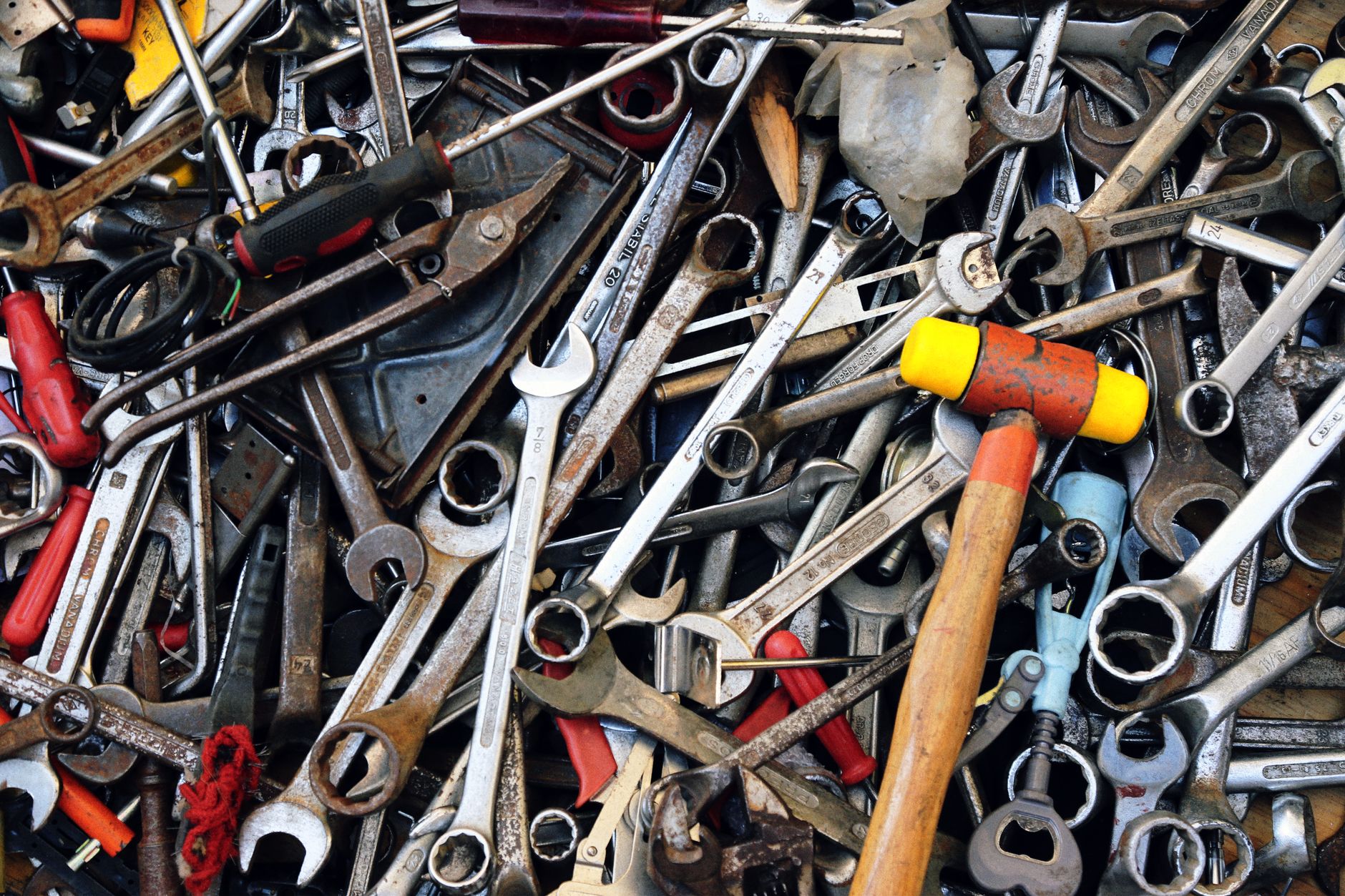
Close-up view of various tools including wrenches and a hammer, providing a cluttered yet organized look.
Photo by Şahin Sezer Dinçer on Pexels

Automated filters catch volume. On a marketplace in Ohio that sells used music gear, a moderator named Wes runs a script that flags new accounts listing items above $500 in their first 24 hours. The script catches most deposit scams and also flags a fair number of honest sellers clearing out a studio. “You set the rule, and then you apologize to the guitarists,” he said.

Photo matching helps. A Lithuanian car-parts marketplace checks new images against a database of known scam photos and blocks around 200 listings a month that would have gone live. The scammers adapted by cropping and flipping images, so the matching runs on perceptual hashes rather than exact files. Human review still sits behind every automated block.

The tools do not shrink the queue so much as sort it. On Byrne’s site, about nine flagged items in ten clear with a rule or a glance. The rest take a call, and the proportion has held steady for two years.

The cost of watching

tax office, watch dealers, tax evasion, receiving stolen property, bureaucracy, finance, taxes, invoice, tax return, income tax, income tax return, illicit work, country, play dough, cost, tax consultant
Photo by Alexas_Fotos on Pixabay

Moderation is paid in hours before it is paid in money. Byrne budgets six hours a week and usually spends eight. Wes pays himself $22 an hour for the work and counts roughly 300 hours a year. On a marketplace that clears $40,000 in fees, that is real money, and it is the line item that decides whether the site can grow.

The operators who keep at it share one habit. They read their own site daily, the way a shopkeeper walks the floor. Scam patterns surface in browsing before they surface in reports. Byrne spotted a run of fake machinery dealers last spring because three listings used the same phone number with different names. The tooling flagged none of them. “The software is a good assistant,” she said. “It has never once been the boss.”

What It Costs to Run a Listings Site

Piotr Zieliński runs a classifieds site for agricultural equipment near Bydgoszcz. Last year it carried 6,200 active listings, served 310,000 page views a month, and cost him 41,000 złoty to operate, about $10,200. He keeps a spreadsheet of every line. “The server is the joke,” he said. “Every real cost on this sheet is a person or a problem.”

The joke is cheap. Zieliński’s hosting runs on a dedicated box in a Warsaw datacenter for 289 złoty a month, with backups to object storage at another 60. Domain renewal, an SSL certificate, and a transactional email service push infrastructure to roughly $110 a month. Everything else on the spreadsheet is people and problems.

Moderation eats the hours

moderation wall, moderator, moderation, business, meeting, team, manager, management, brainstorming, moderation cards, moderation suitcase, blue, presentation, cloud, people, round, square, oval, balloons, discuss, blog, blogger, to blog, solution, solutions, to solve, suitcase, moderation circles, moderation oval, working group, workshop, metal, stand, green, white, ocher, yellow, empty, clean, moderation walls, presentation walls, moderation, moderation, moderation, business, business, business, business, business, meeting, meeting, meeting, meeting, team, brainstorming, brainstorming, brainstorming, brainstorming, presentation, people, square, square, square, square, oval, discuss, blog, blog, blogger, blogger, blogger, blogger, solution, suitcase, workshop, workshop, workshop
Photo by MR-PANDA on Pixabay

Two people review listings on the site: Zieliński for two hours a day and a part-time moderator in Toruń at 38 złoty an hour. Together they handle about 120 flagged items a week, mostly duplicate car ads and misfiled equipment. The moderator’s 2025 pay came to 23,400 złoty, the largest line in the budget.

The work is repetitive and specific. A tractor listing with three photos and a phone number clears in 40 seconds. A suspicious one takes ten minutes and sometimes a phone call to the seller. Zieliński prices his own time at 100 złoty an hour when he totals the sheet. By that count, moderation costs the site more than everything technical combined.

He tried outsourcing in 2024, paying a firm in Kraków 1,800 złoty a month to pre-screen listings. They approved a run of scam tractor ads in week three. Zieliński canceled the contract and went back to the queue himself.

What spam actually costs

e-mail, mail, contact, letter, hand, write, glut, spam, internet, communication, digital, news, computer, networking, computer science, information, post office, transfer, envelope, network, e-mail, e-mail, mail, mail, mail, mail, mail, spam, post office, envelope
Photo by geralt on Pixabay

Spam arrives in waves rather than a steady drip. In 2025 the site blocked 88,000 automated registration attempts and about 3,400 listings that were scams or pure advertising. A CAPTCHA and a filter for throwaway email domains stopped most of it at the door. The rest reached review.

The filters get rewritten twice a year. One rule that blocks the word ‘deposit’ in listing text has caught 400 scams and exactly one honest seller, who wanted a deposit for a custom-built trailer. Zieliński keeps a list of exceptions and reads it whenever the block log looks strange.

One wave in March got through. Scammers copied real tractor listings at half price, asked for deposits by bank transfer, and collected from four buyers before the pattern surfaced. Zieliński refunded 6,200 złoty out of pocket, changed his listing-approval rules, and wrote the loss into the sheet under a row he labeled “education.”

Where the money comes from

Boxes of 'Here Comes the Money' Firecrackers at Nanliao Fumei Temple
Photo by Tbatb on Wikimedia Commons

The site pays for itself on paid listings and dealer subscriptions. Individual sellers pay 15 złoty to list an item for 60 days. Equipment dealers pay 400 złoty a month for bulk posting and a badge. In 2025 those two lines brought in 96,000 złoty against the 41,000 in costs, which leaves Zieliński about 55,000 złoty for roughly 20 hours of his week.

He has been asked why he keeps the site at that size. The margin per listing falls the moment he adds staff, and the buyers know it as a local trade board, which is the product. “You can run one of these alone if you answer emails the same day,” he said. “The day you stop, the sellers leave.”

Why Marketplaces Die in Year Two

When a tool resale marketplace opened in Manchester in 2022, it launched with 1,400 registered sellers and a write-up in the local paper. Eighteen months later it carried 200 active listings a month and spent £11,000 a month to keep going. The founder, who asked to be identified only as Dan, sold the code to a competitor for £4,000. “Year one is the launch,” he said. “Year two is when you find out if anyone comes back.”

The pattern has a shape. A marketplace needs enough listings that a buyer finds the thing they came for, and enough buyers that a seller gets an answer within a day. Economists have studied this configuration for decades under the name two-sided market, and the practical problem beneath the theory is stubborn: supply and demand have to arrive close together, or both sides drift away.

Liquidity is a small number

Close-up image of the number 60 on a glass surface with water droplets and a warm backlight.
Photo by Stanislav Kondratiev on Pexels

Operators talk about liquidity as if it were a river. On the ground it is a count. Dan’s marketplace needed roughly 300 live listings in a category before buyers returned weekly. In its best category, cordless drills, it peaked at 190. “Buyers would search, see one page of results, and leave,” he said. “Then sellers would see zero views and stop listing. Both sides were right.”

That is the chicken-and-egg problem in plain clothes. Sellers on the supply side wait for demand, buyers wait for supply, and a small marketplace lives or dies on which side it can subsidize first. Dan paid sellers £5 per listing for three months. It filled categories fast and emptied them in January, when the payments stopped.

Dan saw the same drift on the seller side. A listing that drew zero views in its first week was almost never renewed, and renewal fees paid his hosting. With 260 repeat sellers, the marketplace had 260 customers. Everyone else was passing through.

Where the second year goes wrong

A joyful indoor birthday celebration for a two-year-old with balloons and confetti.
Photo by Pavel Danilyuk on Pexels

Year one runs on novelty and founder money. Friends list items, local press links to the site, and the graph climbs. Year two runs on habit, and habit is where weak marketplaces lose. A site operator in Ohio who asked not to be named described the drop in her handmade-goods marketplace: “Month fourteen, listings fell 40 percent. Nothing broke. People just went back to Facebook Marketplace, where their friends already were.”

Retention numbers decide it. Of the 1,400 sellers who registered on Dan’s site, 260 listed more than once. Of the buyers who made one purchase, 8 percent made a second one. A marketplace cannot pay its costs on a single transaction per customer, so the second year is really a test of whether the first year built a habit.

What the survivors measured

Hands measuring the circumference of a tree trunk with a tape measure, focusing on environmental conservation.
Photo by cottonbro studio on Pexels

The marketplaces that made it past year two picked a narrow lane and tracked one number. A motorcycle-parts site in Rotterdam counts parts matched per week. A farm-equipment listing site in Saskatchewan counts phone calls between buyer and seller. Both numbers sat at the center of every decision their owners made.

The Rotterdam owner checks category counts every Monday morning and shifts featured slots toward whatever runs thin. Empty shelves get attention first, before marketing and before features.

Neither business raised money. Both charge small fees (3 to 5 percent on completed sales) and both treat empty categories as an emergency. “If a buyer finds nothing in the first three clicks, I have a week to fix it,” the operator in Ohio said.

Dan’s old marketplace redirects to a holding page now. The domain still gets 400 visits a month from buyers searching for drills. He checks the analytics out of habit. “The demand was real,” he said. “I just couldn’t get enough of it in one place at one time.”

The Classifieds Site That Outlived Three Apps

When Targowisko.pl went online in 2011, its first listing was a used bicycle in Poznań. The seller wanted 220 złoty and asked to be called after 6 p.m. Marta Kowalczyk, then 28 and building websites for local shops on contract, posted it herself to test the form. Fifteen years on, the site carries about 40,000 active listings a month, and Kowalczyk, 43, still runs it.

Three apps have come and gone over the same stretch. A local delivery startup, a classifieds app backed by a German fund, and a venture-backed furniture resale platform each launched with press and money and closed within three years. The listings site outlasted all of them. Its survival comes down to choices that look dull on paper.

A narrow catalogue

O&K catalogue N° 902, page 52, Carrying timber on a baltic narrow gauge railway
Photo by Unknown photographer, probably on behalf of Orenstein & Koppel (O&K) on Wikimedia Commons

Targowisko.pl sells nothing itself. It takes listings in eight categories: furniture, bikes, tools, garden equipment, cars, motorbikes, boats, and building materials. Kowalczyk turned away phones and clothing early. “The big platforms have those,” she said. “I wanted heavy things that people buy within 30 kilometers of home.”

That filter shaped the buyers too. Someone shopping for a table saw or a rowing machine checks a classifieds site first, because scanning 200 listings beats scanning 20,000. A narrow catalogue made search useful at low volume, and low volume is where a site like this lives.

Traffic barely moves and Kowalczyk prefers it that way. The site’s 310,000 monthly page views cost almost nothing to serve, and the buyers who arrive want one specific machine or piece of furniture. Seasonality is mild. Furniture peaks in September when students move, garden equipment peaks in April, and the flat weeks in between are covered by dealer subscriptions.

The money came later than the traffic

money, cash, dollars, finance, greenback, usd, bank, bank notes, money, money, money, money, money
Photo by Barta4 on Pixabay

Revenue took four years to matter. Paid bumps (12 złoty to move a listing to the top of its category for seven days) started in 2013 and now supply most of the income. Featured slots for car dealers followed in 2017. Last year the site billed about 640,000 złoty, roughly $160,000, with two part-time moderators and a hosting bill under $90 a month.

Her competitors spent their way to traffic. Kowalczyk spent nothing on advertising for six years. “We ranked in Google because the pages loaded fast and the titles were plain,” she said. The venture-backed app outbid her on every keyword in 2019 and shut down in 2021.

What the apps got wrong

A close-up of a red wrong way road sign against an overcast sky, symbolizing caution.
Photo by David McElwee on Pexels

Delivery sounds like a feature. For a table saw in Poznań it is a cost. Buyers on Targowisko.pl collect in person about 90 percent of the time, which keeps disputes near zero and keeps the operator out of the payment until 2022, when card payments for bumps arrived through a Polish processor.

The apps also chased supply that never converted. An app with 500,000 downloads and thin listings loses to a site with 40,000 listings and buyers who pick up the phone. Kowalczyk measures the business in calls per day. That number has held between 300 and 500 since 2016.

None of this makes the site untouchable. Facebook Marketplace took a bite out of furniture listings after 2018, and Kowalczyk answered with a verified-seller badge for dealers who pay monthly. The badge costs 180 złoty and brings in about 9,000 a month.

Operators who find her at trade meetups ask about apps. She tells them the site works in a browser, and that her users are 35 to 65 and know what a browser is. Then she goes back to the moderation queue.